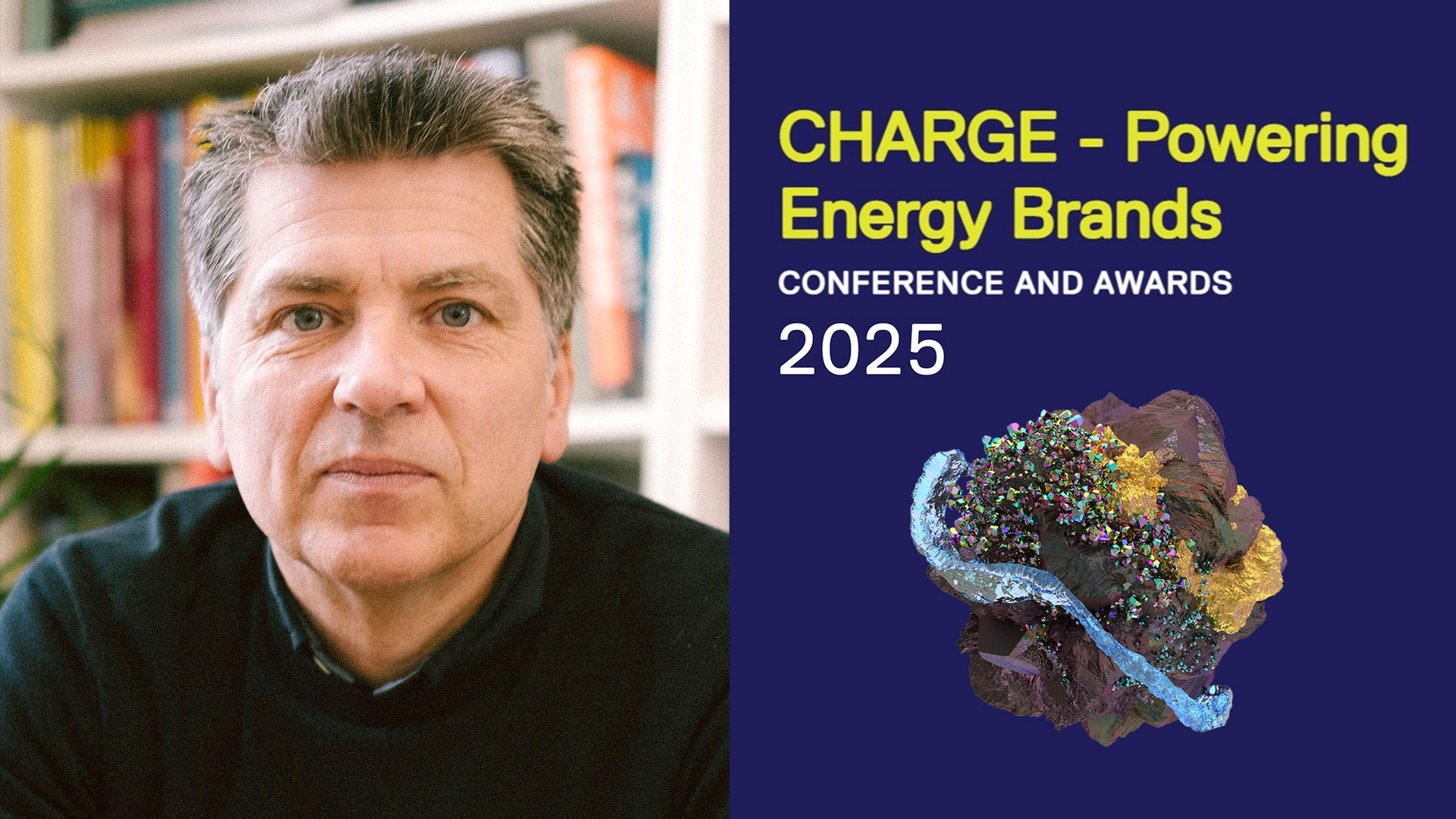
Brand architecture is the backbone of reputation yet too often, organisations treat it as little more than a design exercise. Ahead of CHARGE 2025, Simon Richards, Founder & Creative Director at RichardsDee, shares why brand is central to building credibility, the eight most common mistakes companies make, and how energy leaders can use architecture to stand out in a commoditised sector.
You’ve worked with many organisations on clarifying their brand architecture. Why is brand such a central part of building reputation in any category?
Brand is central because it’s the foundation of reputation. In any category – and especially in energy – a strong brand architecture builds awareness, demonstrates expertise, and allows a portfolio to stretch across different customer needs. Too often, we see organisations invest heavily in individual products or standalone brands that give little back to the masterbrand. This not only costs more to market, but it also dilutes the value, trust, and authority that the masterbrand can bring – and in some cases, even sets owned brands in competition with each other.
That’s not to say there’s never a place for standalone brands or product-led campaigns. But the power of the masterbrand is that it carries reputation and trust into everything beneath it. It creates consistency, authority, and a platform that individual products alone can’t achieve.
What are some of the common mistakes you see when organisations don’t have a clear brand architecture?
The biggest mistakes tend to fall into a few recurring patterns:
- Under-investment in the portfolio – allowing legacy brands, assets, and processes to linger even when they’re no longer fit for purpose.
- No clear end state – not defining what the future brand model should look like, which makes it impossible to plan backwards with discipline.
- Unclear roles and value – failing to set guidance on what each sub / product brand contributes within the architecture, leaving decisions ad hoc and inconsistent.
- Siloed brand activity – individual brands acting in isolation, without a common purpose anchored in the masterbrand.
- Misallocated spend – over-investing in brands that don’t warrant it, duplicating effort, and missing the efficiencies that come from focusing on the right priorities.
- Reducing architecture to a logo change – overlooking that brand architecture is about business strategy, governance, and investment, not just design.
- Assuming one size fits all – most organisations actually operate with a hybrid model, but mistakes happen when leaders apply rigid frameworks without recognising the balance of endorsement, independence, and flexibility needed across markets and categories.
- Neglecting customer-centricity – brand architectures often fail because they’re built around internal needs rather than customer needs, making it harder for people to understand, navigate, and choose between products or services.
Without a clear architecture, customers face confusion, the business wastes energy and investment, and the masterbrand loses the authority and trust it could otherwise deliver.
How can brand architecture help energy companies stand out in what is often seen as a commoditised sector?
Brand architecture gives structure and meaning in a sector where products can otherwise feel interchangeable. It reduces confusion in an industry full of technical terms and abbreviations, helping customers navigate products more easily. For masterbrands, it creates a simpler, more compelling narrative that can be amplified across businesses and categories, showing a cohesive mindset and common goals.
A clear architecture also signals to investors and customers why each part of the business is connected, strengthening reputation and authority. It maximises the impact of marketing spend, avoids duplication, and ensures that every product or service builds equity back to the masterbrand. Most importantly, it allows companies to distinguish value propositions within the same category – turning what looks like a commodity into a portfolio of trusted, differentiated solutions.
What will you be focusing on in your session at CHARGE in Istanbul?
I’ll be focusing on how branding can play an integral role in major change programmes, particularly for energy organisations looking to become more brand-led. I’ll share how branding can drive storytelling, shift external perceptions, and build inclusion and engagement among employees. Using the Uisce Éireann transformation as an example, I’ll explore how the brand programme acted as a common thread across multiple workstreams and stakeholders, helping to galvanise the organisation. Finally, I’ll highlight why brand is often the most visible signal of change – but also why it must be underpinned by real actions, cultural shifts, and service improvements to deliver long-term impact.

Why do you think it’s important for energy leaders to invest in brand now, at this point in the transition?
We’re moving from industries that were once one-dimensional – focused solely on delivering a service –to ones that are now multidimensional, engaging with a wide range of stakeholders and expectations. At the same time, competition is intensifying, with many new and different players entering the energy space. In this environment, successful organisations are those that invest in their brand: building trust, clearly demonstrating what they stand for, and ensuring they remain top of mind during a period of rapid transition. As the language around the energy transition becomes more accessible, brands need to lead rather than follow.
What are you most looking forward to at CHARGE, and what do you hope to take away from the conversations in Istanbul?
I’m looking forward to the exchange of new ideas on a truly international stage, the breadth of topics being explored, and the chance to see how branding is shaping everything from customer care to employee motivation. I’m also keen to hear directly from industry leaders and peers, gaining fresh perspectives from different geographies that can inspire our thinking about brand-led transformation in the energy sector.
We’ll be sharing the story of an organisation that began under intense political scrutiny and public hostility, yet has, over the past few years, rebuilt its purpose and redefined its role in delivering a safe and sustainable water service for Ireland. While the focus will be on the brand transformation, we’ll also touch on the many initiatives that enabled this shift, showing how brand can be both a catalyst and a signal of deeper organisational renewal.